Warning: This article contains graphic descriptions of death and injury.
On January 8, amidst protests in Tehran, Reza tragically lost his wife Maryam, who was fatally shot during the unrest. In his grief and desperation, he carried her body for over an hour, only stopped by exhaustion as he sought refuge from the chaos. Despite the idyllic moments they shared with their two young children, Maryam had foreseen the risks of her activism, candidly warning them that sometimes parents go to the protests and don't come back.
Maryam’s death is part of a broader crisis as Iranian civil unrest leaves thousands mourning. The U.S.-based Iranian Human Rights Activists News Agency reports a toll of at least 2,400 deaths, including young lives cut short by the government's violent response to demonstrations. The dire situation is exacerbated by an ongoing information blackout, limiting the flow of accurate data and increasing the risk that the death toll will escalate.
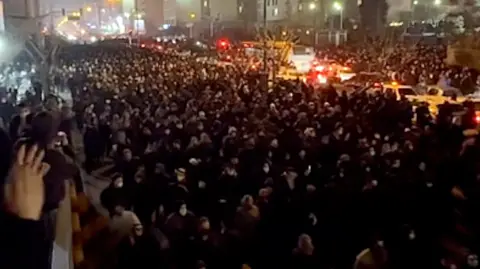
Witnesses describe the protests as more than just demonstrations—they liken the atmosphere to war. Families live daily with the looming fear of an expanded crackdown, with many feeling compelled to flee the country. Amidst this turmoil, there’s a steadfast resolve among the protesters, who remain united in the face of adversity, even as chaos engulfs their communities.
Young lives filled with hopes and ambitions are being extinguished. Sorena Golgun, an 18-year-old university student shot while fleeing security forces, and Robina Aminian, a 23-year-old aspiring fashion designer, are just two stories among many others that echo across Iran. As protests surge across all provinces, security forces have reported deaths among their ranks too, labeling demonstrators as rioters.
With numerous human rights organizations unable to gain direct insight, global awareness is desperately needed to shed light on the violent suppression of dissent in Iran. The stories continue to unfold, and the risk remains high for those who dare to challenge authority.