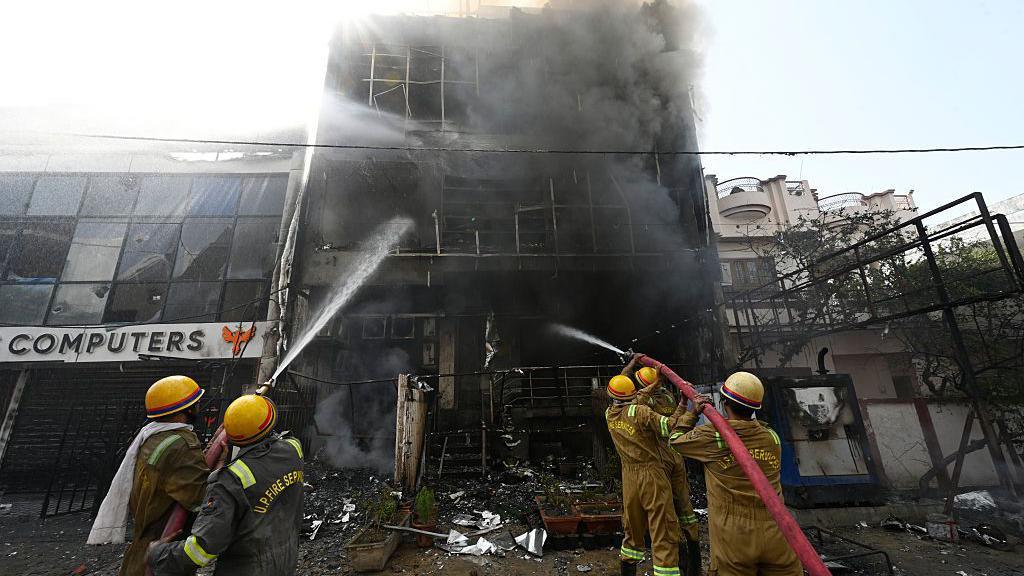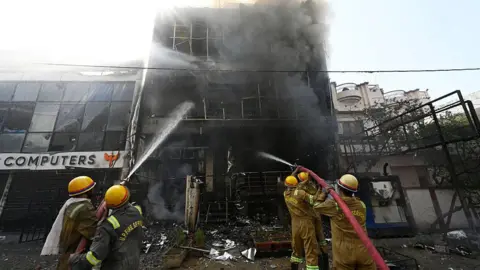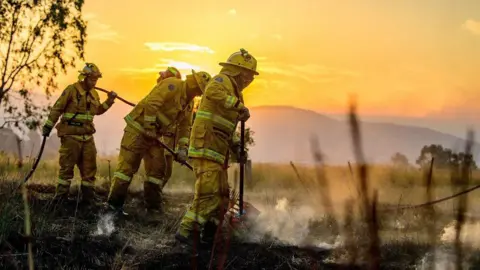
Firefighters in the Australian state of Victoria are battling at least six major fires as a record-breaking heatwave spills across the country's south-east.
Currently, two fires are burning at 'emergency level', as reported by local broadcaster ABC News. Residents in several communities have received emergency warnings advising them to evacuate, shelter in place, or remain vigilant.
Fire officials warn that the situation is rapidly deteriorating, encouraging locals to stay updated with the latest information.
The Bureau of Meteorology reports that certain areas have recorded unprecedented temperature highs, including a staggering 48.9C in one location, while Melbourne has seen temperatures climb to 41C.
Chris Hardman, chief fire officer at Forest Fire Management Victoria, stated the extreme heat is creating incredibly difficult conditions for the firefighting efforts.
The two main fires in Camperdown and Otways are of particular concern, alongside a new fire in the Larralea area, which is also causing significant alarm. The Country Fire Authority's chief officer, Jason Heffernan, warned that the Otways fire could generate ember showers that risk igniting new fires ahead of the main front.
While the extent of the damage is still being assessed, Australia's Deputy Incident Controller, Alistair Drayton, noted he has received anecdotal reports indicating some homes may have been lost in the fires.
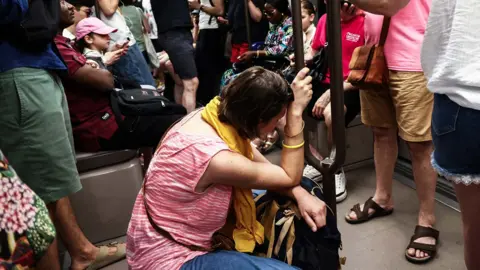
In addition to the fire threats, health officials have issued warnings about the extended heat posing severe health risks, especially to vulnerable populations such as the elderly and those with pre-existing health conditions. Victoria's chief health officer, Caroline McElnay, cautioned that prolonged exposure could lead to serious health issues, including heat exhaustion and strokes.
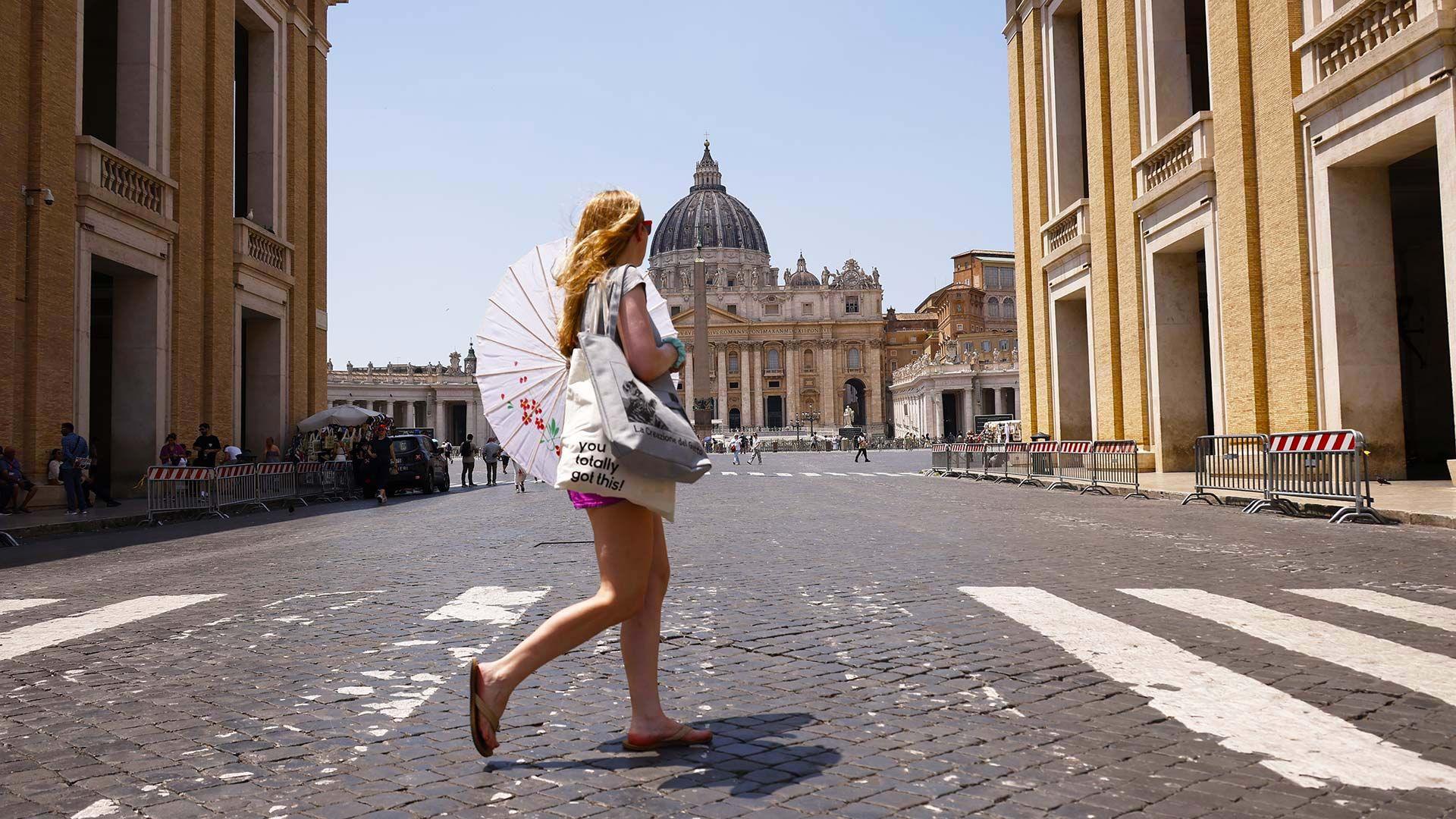
Scientists emphasize that human-induced climate change is increasingly contributing to the frequency and severity of heatwaves, making such scenarios more susceptible to both natural and human-induced fires.
As Australia's climate faces ongoing challenges, the likelihood of extreme fire weather conditions is expected to continue, according to the UN's Intergovernmental Panel on Climate Change (IPCC).