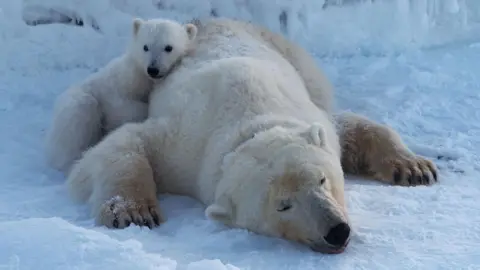
Scientists expected the opposite, but polar bears in the Norwegian Arctic archipelago of Svalbard have become fatter and healthier since the early 1990s, all while sea ice has steadily declined due to climate change.
Polar bears rely on sea ice as a platform from which to hunt the seals that provide them with blubber-rich meals. The bears' fat reserves are critical for energy, insulation, and producing rich milk for their cubs.
Researchers analyzed data from 770 adult polar bears measured between 1992 and 2019 and discovered a significant increase in fat levels. This unexpected finding is attributed to their adaptation to recent ice loss, as they seem to have begun hunting more land-based prey, including reindeer and walruses.
Walruses, protected in Norway since the 1950s and recovering in numbers, have become a more accessible food source for these polar bears. As traditional hunting platforms on sea ice diminish, seals may cluster in the reduced ice areas, allowing bears to hunt more efficiently.
Despite this increasingly positive outlook for Svalbard's polar bears, researchers stress that the long-term implications of climate change could undermine these gains. As sea ice continues to diminish, bears will face longer travels to hunting grounds, exhausting energy reserves and threatening their overall health.
Dr. Jon Aars from the Norwegian Polar Institute notes, The fatter a bear is the better it is, highlighting the pressing need for ice to sustain the polar bear populations in the future. Meanwhile, contrasting studies indicate that in other regions, such as Canada’s Western Hudson Bay, the bears show declines directly linked to climate change impacts.