First comes the warning, that disembodied voice over the tannoy: 'Your attention please. Air siren in the city. Please move to the shelter on the minus second floor.' Then comes the mosquito-like whine of the incoming Russian drones, massing in their hundreds just above the clouds.
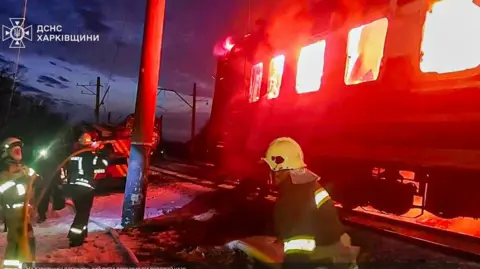
It's followed immediately by the rattle of anti-aircraft fire, the distant thud of explosions, then finally the ominous klaxon call of ambulance and fire sirens.
This is the grim reality of night time in Kyiv and other cities across Ukraine.
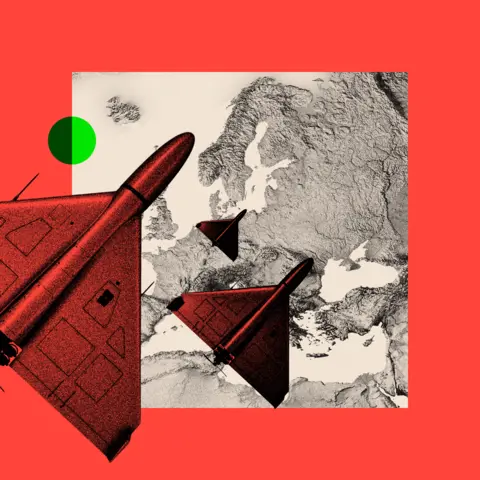
These are attack drones that explode on impact. Drones are now an integral part of modern warfare, but they are not confined to the battlefield.
Across western Europe, far from Ukraine, unarmed drones have also been found buzzing around airports, military bases, and power plants, all part of a suspected programme of 'hybrid warfare' being waged by Russia, with some speculating they're arriving to test the resilience of certain NATO countries that are helping Ukraine.
Recent sightings in Poland, along with those spotted near critical infrastructure across Europe, including in Belgium and Denmark, have sparked fear in several NATO countries. Now, there is talk that a 'drone wall' is to be designed to protect parts of Europe - but just how necessary is this, really? And more pertinently, how realistic?
On September 9, around 20 Russian drones overshot Ukraine and flew into Poland, forcing the closure of four airports. NATO jets were scrambled, and several drones were shot down - the rest crashed across Poland, scattering debris in multiple regions. This incident served as a wake-up call to Europe, marking one of the largest breaches of NATO airspace since the war in Ukraine began.
Discussions around a potential drone wall are gaining momentum as countries assess their air defense capabilities. This integrated, coordinated defense system aims to protect against cross-border incursions from Russia, but experts suggest it may not be a foolproof solution.
Meanwhile, tensions continue to rise, with Belgium seen as a significant target due to its role as the home of NATO headquarters, the EU, and a major financial clearing house. The precarious balance of airspace security underlines the urgency of developing effective countermeasures to address both known and unidentified drone threats.
As NATO works on potential solutions, including funding discussions involving frozen Russian assets, the complexities of implementing a comprehensive defense system—and the financial implications—remain a contentious topic among allies.