Thousands of files provided by a whistleblower at Interpol expose for the first time the extent of Russia's apparent abuse of the international policing agency to target its critics abroad.
The data provided to the BBC World Service and French investigative outlet, Disclose, reveals that Russia is using Interpol's wanted lists to request the arrest of people such as political opponents, businessmen, and journalists, claiming that they have committed crimes.
Analysis of data also suggests that over the past decade, Interpol's own independent complaints unit has received more complaints about Russia than anyone else - three times more than the next highest country, Turkey.
In addition, it indicates complaints against Moscow's requests have led to more cases being overturned than for any other country.
After Russia's full-scale invasion of Ukraine, Interpol introduced extra checks on Moscow's activity to prevent any potential misuse of Interpol's channels in relation to the targeting of individuals within or beyond the conflict in Ukraine.
But the leaked documents suggest these did not prevent Russia abusing the system and the whistleblower told us some stricter measures were quietly dropped in 2025.
In response, Interpol says that every year, thousands of the world's most serious criminals are arrested thanks to its operations and that it has a number of systems to avoid misuse which have been strengthened over the last few years.
It also says it is aware of the potential impact requests for arrest can have on individuals.
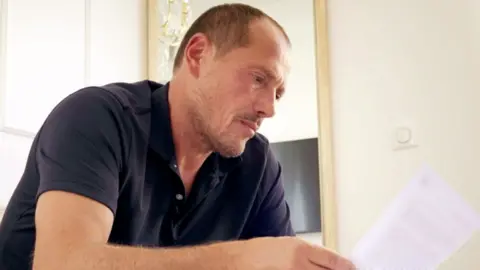
When you're hit with a red notice, your life changes completely, says Igor Pestrikov, a Russian businessman, whose name appears in the leaked files. Interpol is not a global police force itself, but helps police across the world to co-operate.
Pestrikov found he was named in a red diffusion after he fled Russia in June 2022 - four months after the invasion of Ukraine - and applied for asylum in France.
He felt he had two options: Go to the police and say, 'I'm in the Interpol system' and risk arrest or lie low. This may mean you can't rent an apartment, your bank accounts get blocked, which is what happened to him, he says.
It's constant nerves, all the time, he adds, explaining he was always looking over his shoulder.
Pestrikov had been a major shareholder in large metals companies in Russia that were privatised in the 1990s, most notably Solikamsk Magnesium Plant.
In the months leading up to the 2022 invasion of Ukraine, he says government ministers pressured him to stop selling his products abroad and only supply the Russian market. He believed this would mean his products could be used to make components for military hardware, such as fighter jets and tanks.
After Pestrikov had spent almost two years on the wanted list, the CCF ruled that his case was predominantly political. Interpol only releases very basic data about illegitimate requests for arrests and since 2018 has not revealed which countries are the subject of complaints and inquiries. This lack of transparency makes it difficult to assess the scale of the problem, but for the first time, the leaked documents reveal a much fuller picture.
Historically it has been Russia who is one of the main perpetrators of abusive red notices, says British barrister Ben Keith, who has represented many clients wishing to have their names removed from Interpol's wanted lists.
International lawyer Yuriy Nemets, who specializes in Interpol matters and extradition, agrees that Interpol's extra scrutiny of Russia's requests for arrests has not proved effective.