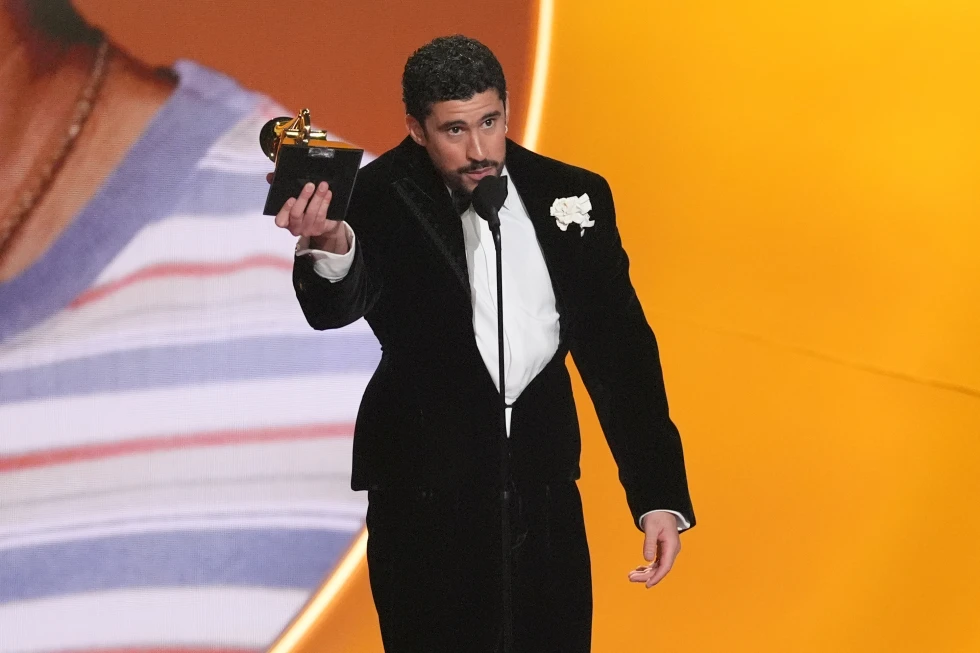
LOS ANGELES (AP) — The Album of the Year award at the 2026 Grammy Awards was presented to Bad Bunny for his record 'Debí Tirar Más Fotos,' a win regarded as a remarkable acknowledgment of Latin music in mainstream media. Industry experts deemed the album highly deserving, but its victory came as a surprise given the Grammys' historical reluctance to embrace diverse musical backgrounds.
This year’s awards were marked by a strong anti-Immigration and Customs Enforcement (ICE) discourse, with multiple artists addressing immigration issues during their acceptance speeches. Almost half of the nine televised awards acknowledged this pressing social narrative, showcasing a shift in the Grammy Awards' focus.
An evolving Grammy Awards
Historically criticized for a lack of diversity, the Grammy Awards have adapted significantly in recent years, increasing the number of voters from varied backgrounds. In 2025, the Recording Academy invited 3,800 new members, half of whom are under 39, with 58% identifying as people of color and 35% as women. This inclusivity reflects a growing recognition of Latino, R&B, and other artists historically overlooked by the institution.
Bad Bunny's victory is particularly noteworthy, as he joins the ranks of a select few Latino artists to capture the Album of the Year award—previous winners include Santana and the duo of Stan Getz and João Gilberto.
The album 'Debí Tirar Más Fotos' not only achieved commercial success, being the most-streamed release globally in 2025, but also presents profound artistic value by blending traditional Puerto Rican music with contemporary genres. It uniquely celebrates cultural identity while politically engaging with broader global issues.
During the ceremony, Bad Bunny and other artists like Billie Eilish and Olivia Dean did not hesitate to speak out against immigration policies, asserting their immigrant roots and calling for recognition of the struggles faced by communities under the current political climate. Eilish's declaration, 'No one is illegal on stolen land,' resonated deeply, as did Dean’s commitment to honoring her immigrant lineage.
A historical precedent
Bad Bunny's remarks carried a historical weight, as his statements reflected a rich narrative of Puerto Rican identity and the struggles against colonialism and oppression. He emphasized the humanity of immigrants, countering derogatory terms used in the past by political figures. In his victory speech, he boldly proclaimed, 'We’re not savages, we’re not animals, we’re not aliens. We are humans and we are Americans.'
The feeling in the room was charged with both celebration and defiance, as artists united in a message that transcended music, advocating for societal change and recognition. As Bad Bunny prepares for a Super Bowl halftime performance, his influence within the cultural landscape continues to grow, making a powerful statement about the future of Latin music and immigrant rights in America.