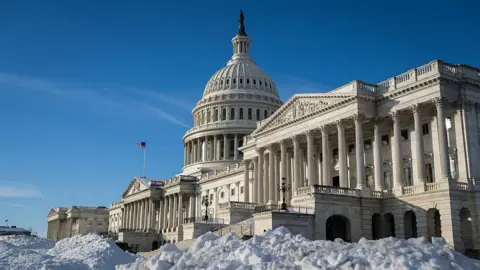
The deployment of National Guard troops in Washington, D.C. faces significant challenges in the courts. A hearing is underway that may determine whether to remove over 2,000 Guard members from the streets, amidst President Trump's executive order citing a crime emergency despite the Justice Department having reported a 30-year low in violent crime.
In parallel, challenges arise from West Virginia, where a civic group argues that Governor Morrisey exceeded his authority by sending troops to support Trump's initiatives. Meanwhile, in Oregon, a judge is weighing whether to dissolve temporary orders preventing the deployment of troops due to legal contention surrounding federal authority.
Chicago has also found itself impacted, as a District Judge blocked troop deployments, pending a resolution in either her court or by the U.S. Supreme Court. These legal confrontations underscore the widening rift between state and federal powers amidst current political climates.
In Tennessee, a lawsuit launched by Democratic officials contests the legality of troops deployed in Memphis, citing the need for legislative approval under state law. This flurry of legal action paints a picture of a nation grappling with governance and military presence in civilian contexts, potentially reshaping the interpretation of constitutional principles regarding the National Guard.