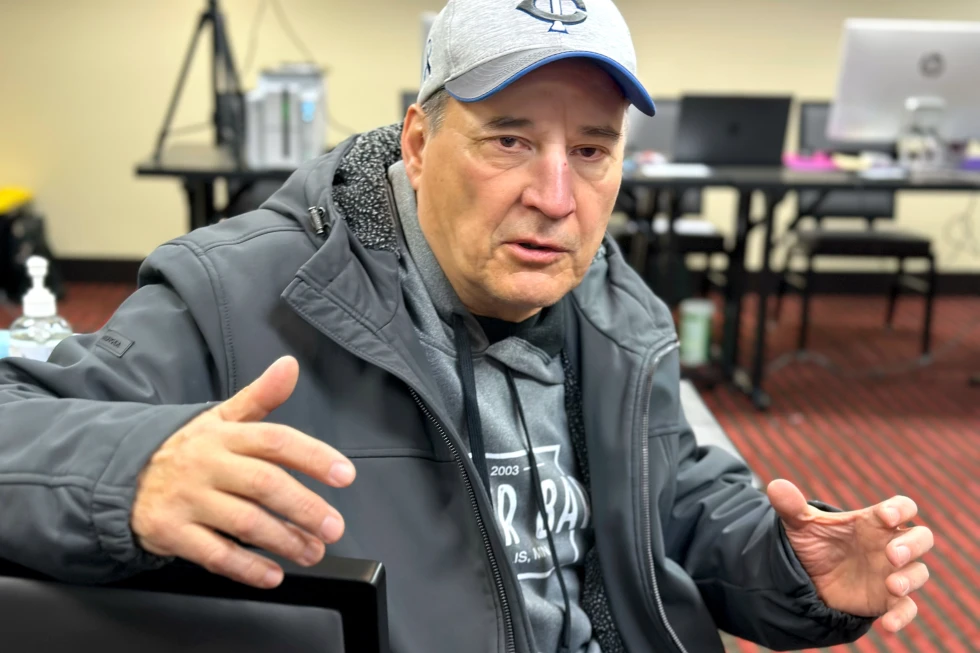
MINNEAPOLIS (AP) — In response to a surge in U.S. Immigration and Customs Enforcement (ICE) operations, many Native Americans are now keeping their tribal citizenship documents close at hand. Shane Mantz, a Choctaw Nation citizen, shares his personal experience of quickly reaching for his tribal ID card whenever he fears being misidentified as Latino during potential ICE encounters. This concern echoes among many Native Americans across the nation who see a pressing need to affirm their citizenship, an identity that has historically been undermined by governmental policies.
This crisis has prompted over 575 federally recognized tribes to streamline the process of obtaining tribal IDs by reducing fees, lowering eligibility ages, and expediting the issuance of these documents for community members. As David Wilkins from the University of Richmond notes, this unprecedented reliance on tribal IDs as proof of U.S. citizenship marks a significant change in the landscape of Native identity.
The historical backdrop reveals that detailed genealogical records, maintained since the 1800s, have long influenced Native Americans' access to essential services and have served assimilation efforts.
Currently, about 70% of Native Americans live in urban areas, such as the Twin Cities, where the population is particularly vulnerable to ICE operations. Following a recent announcement by ICE of the largest immigration enforcement action to date, heavily armed agents patrolled neighborhoods, leading to thousands of arrests.
In response, tribal representatives have traveled to cities to support their members in obtaining tribal IDs, underscoring the communal effort to safeguard against the threats posed by federal law enforcement. Notably, incidents of racial profiling have been reported, with natives recounting unjust stops and detentions by ICE officers who questioned the authenticity of tribal IDs.
As concerns escalate, both individual and collective responses are rising, with many advocating for the assurance that Native Americans should not face discrimination or scrutiny regarding their citizenship in the very land that is theirs by heritage. As these developments unfold, the question remains: Why must Native Americans now carry identification to prove their rightful existence in their ancestral lands?
This crisis has prompted over 575 federally recognized tribes to streamline the process of obtaining tribal IDs by reducing fees, lowering eligibility ages, and expediting the issuance of these documents for community members. As David Wilkins from the University of Richmond notes, this unprecedented reliance on tribal IDs as proof of U.S. citizenship marks a significant change in the landscape of Native identity.
The historical backdrop reveals that detailed genealogical records, maintained since the 1800s, have long influenced Native Americans' access to essential services and have served assimilation efforts.
Currently, about 70% of Native Americans live in urban areas, such as the Twin Cities, where the population is particularly vulnerable to ICE operations. Following a recent announcement by ICE of the largest immigration enforcement action to date, heavily armed agents patrolled neighborhoods, leading to thousands of arrests.
In response, tribal representatives have traveled to cities to support their members in obtaining tribal IDs, underscoring the communal effort to safeguard against the threats posed by federal law enforcement. Notably, incidents of racial profiling have been reported, with natives recounting unjust stops and detentions by ICE officers who questioned the authenticity of tribal IDs.
As concerns escalate, both individual and collective responses are rising, with many advocating for the assurance that Native Americans should not face discrimination or scrutiny regarding their citizenship in the very land that is theirs by heritage. As these developments unfold, the question remains: Why must Native Americans now carry identification to prove their rightful existence in their ancestral lands?